
Table of Contents
- Family Law Mediation in Colorado
- How Mediation Works
- When the Court Orders Mediation
- Mediation and Domestic Violence
- Is Mediation Confidential
- Making a Mediated Agreement Binding
- Your Mediation Advocate
- Legal Fees
- Talk to a Colorado Springs Mediation Lawyer
- Sources
Family Law Mediation in Colorado
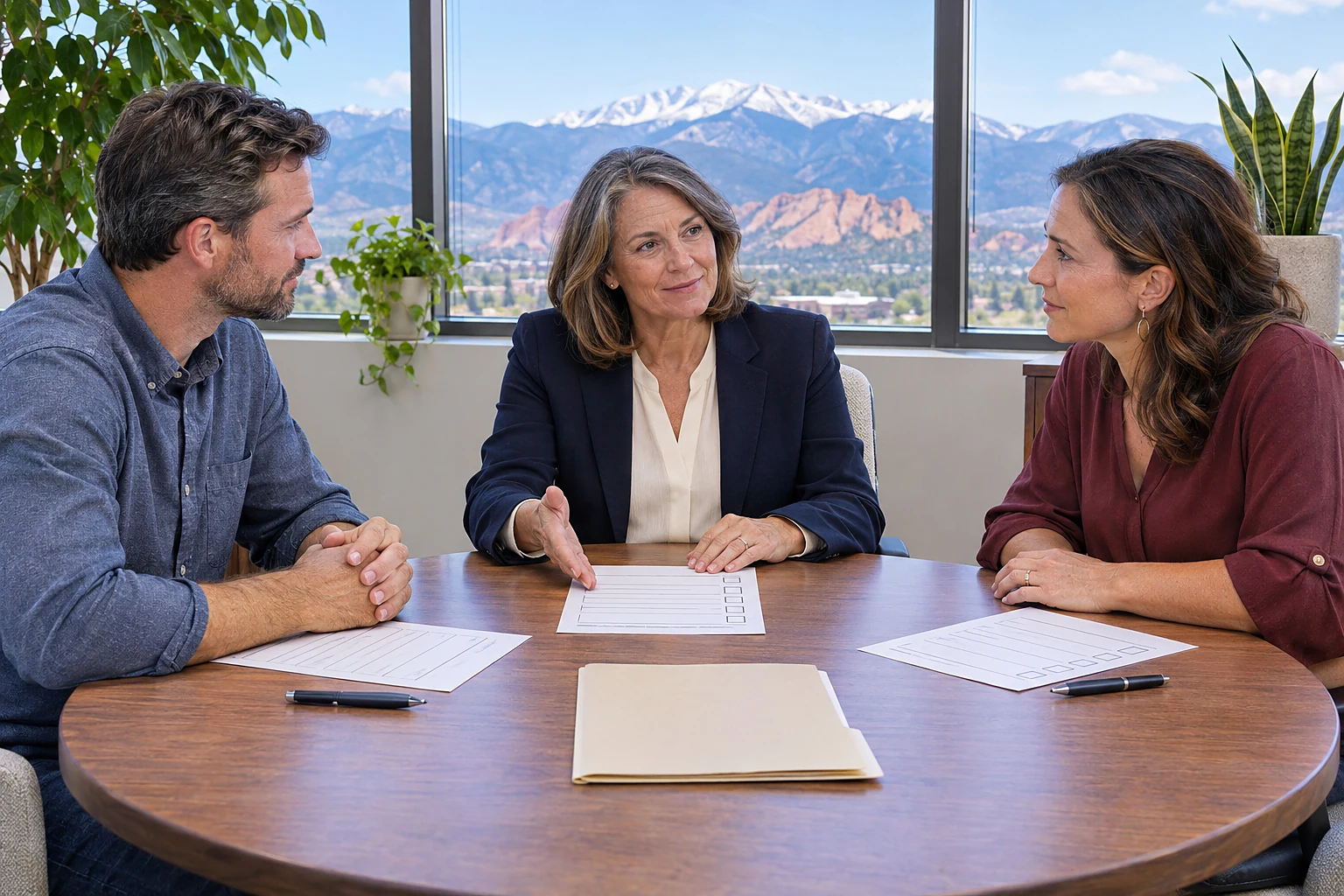
Mediation is a meeting where both parties try to resolve their case with the help of a neutral mediator. The mediator does not decide the case. Instead, the mediator helps the parties talk through the issues and find terms they can both accept.
Many Colorado divorce and custody cases go to mediation before trial. It can resolve parenting plans, child support, maintenance, and property division, often at a lower cost than a contested hearing.
How Mediation Works
Each mediator runs sessions a little differently. In many family cases, the parties sit in separate rooms and the mediator moves between them. Other sessions are held with everyone together, in person or by video.
Before mediation, both parties usually exchange financial disclosures so that everyone is working from the same information. A typical session lasts a half day or a full day. Complex cases may need more than one session.
When the Court Orders Mediation
Under C.R.S. 13-22-311, a Colorado court can refer any case to mediation or another dispute resolution program.
A party can object to a referral by filing a motion within five days of the referral order that shows compelling reasons why mediation should not be ordered. One example in the statute is when the cost of mediation would be higher than the relief requested and earlier attempts to resolve the issues have failed.
Mediation and Domestic Violence
Mediation is not right for every case. The court may not refer a case to mediation when a party says they have been the victim of physical or psychological abuse by the other party and is unwilling to mediate for that reason. This applies regardless of when the abuse occurred or whether the parties mediated before.
When there is a history of abuse, there may be other options, such as a structured settlement conference with attorneys. See our domestic violence page for more.
Is Mediation Confidential
Generally, yes. Under C.R.S. 13-22-307, the parties, the mediator, and the mediation organization generally may not disclose mediation communications, and they cannot be required to disclose them through discovery. The statute has limited exceptions.
Confidentiality allows both sides to speak openly and consider options without worrying that an offer will be used against them in court.
Making a Mediated Agreement Binding
Under C.R.S. 13-22-308, when the parties reach a full or partial agreement, it can be put in writing and signed. Once a signed agreement is presented to the court and approved, it becomes enforceable as a court order.
In a divorce, the court also reviews the property and maintenance terms under C.R.S. 14-10-112 to make sure they are not unconscionable, and it must decide that any parenting terms are in the child's best interests. See our pages on uncontested divorce and divorce for more on how settlements are approved.
Your Mediation Advocate
Patricia serves as a mediation advocate. She is not the mediator. She represents you, prepares you before mediation, and can attend the sessions with you.
The mediator is neutral and cannot give either party legal advice. A mediation advocate can help you understand what a court would likely do, prepare your financial information, and evaluate offers as they come in.
Your advocate can also review the written agreement before you sign it. Small drafting details, such as how retirement accounts are divided or how parenting time exchanges work, can cause problems later if they are not clear.
Legal Fees
Family Lawyer Colorado Springs, P.C. offers flat fees for mediation preparation and agreement review in many cases. Representation through a contested case can be billed against a retainer. We will explain which option fits your situation before any work begins.
Talk to a Colorado Springs Mediation Lawyer
Patricia M. Perello has been licensed to practice law in Colorado since 1990. She serves as a mediation advocate for clients in El Paso County, helping them prepare for mediation, negotiate settlements, and finalize agreements in divorce, custody, and support cases.
The first step is a free telephone consultation. Call (719) 575-9757 to talk about your case and your options.
Sources
- C.R.S. 13-22-307, Confidentiality
- C.R.S. 13-22-308, Mediated agreements
- C.R.S. 13-22-311, Court referral to mediation
- C.R.S. 14-10-112, Separation agreements