
Table of Contents
- What an Uncontested Divorce Is
- What You Need to Agree On
- The Steps in an Uncontested Divorce
- Getting a Decree Without a Court Hearing
- How Long It Takes
- Why Legal Help Still Matters
- Legal Fees
- Talk to a Colorado Springs Uncontested Divorce Lawyer
- Sources
What an Uncontested Divorce Is
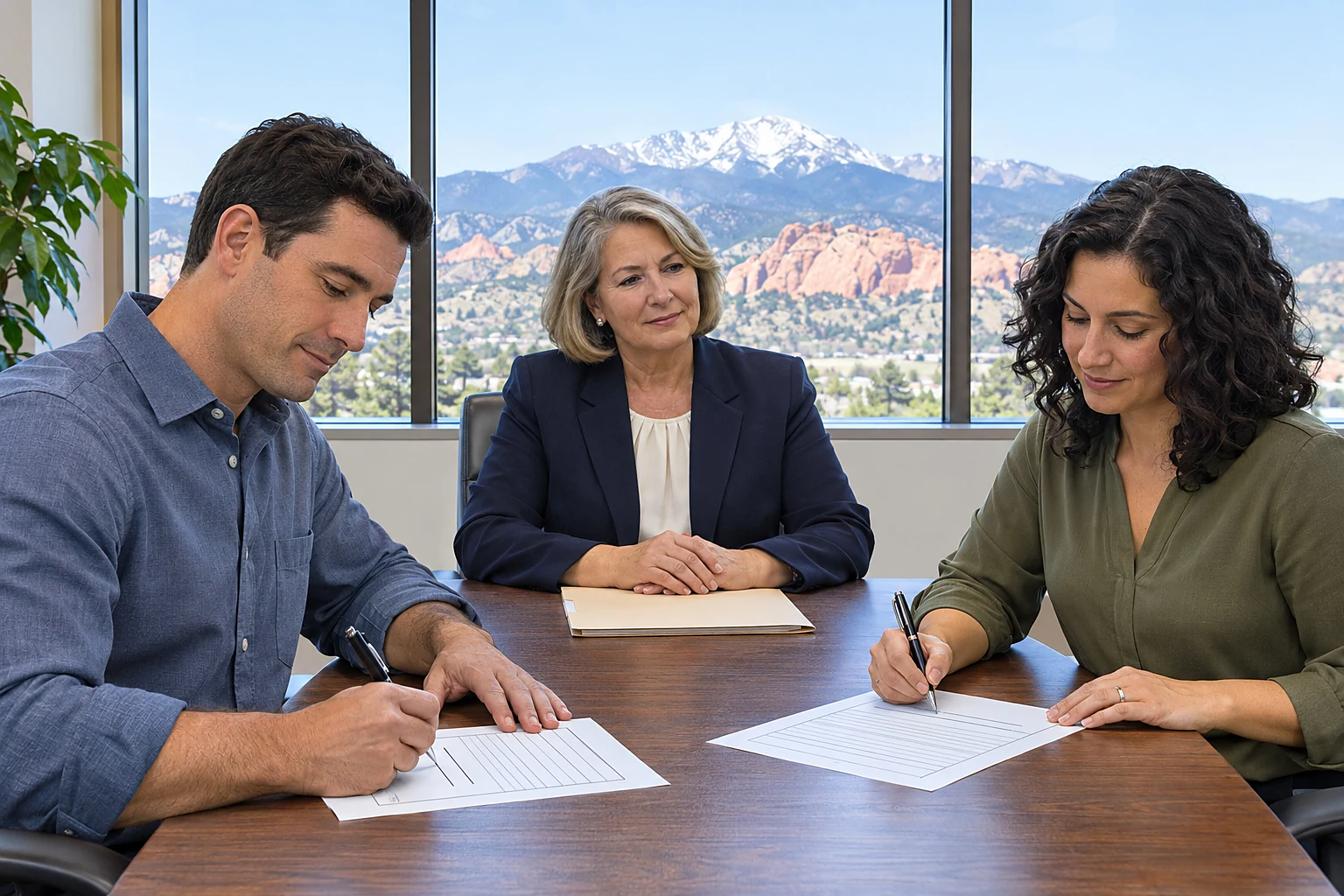
An uncontested divorce is one where both spouses agree on every issue. They agree to end the marriage and on how to divide property and debt, whether maintenance will be paid, and, if they have children, on a parenting plan and child support.
Uncontested divorces are usually faster, less expensive, and less stressful than contested cases. They still have to meet Colorado's legal requirements, and the court still reviews the agreement before entering a decree.
What You Need to Agree On
For a divorce to be truly uncontested, you need a complete written agreement. In Colorado, that is usually a separation agreement under C.R.S. 14-10-112, plus a parenting plan if you have children. The agreement should cover:
- Who keeps the house, vehicles, bank accounts, and other property
- Who pays which debts
- How retirement accounts and military or other pensions will be divided
- Whether spousal maintenance will be paid, and if so how much and for how long
- Parenting time, decision-making, and child support for any minor children
The court reviews the property and maintenance terms to make sure they are not unconscionable. Terms about children are reviewed for the children's best interests and are not binding on the court.
The Steps in an Uncontested Divorce
Spouses can file together as co-petitioners, which avoids the need for formal service. The basic steps are:
- File the petition for dissolution of marriage in the district court, with the $260 filing fee
- Exchange sworn financial statements and the mandatory financial disclosures
- Complete a parenting class if you have children under 18
- Sign the separation agreement and, if needed, the parenting plan and child support worksheet
- Submit the paperwork for the court to enter the decree
Getting a Decree Without a Court Hearing
Many uncontested divorces can be finished without a final hearing. Under C.R.S. 14-10-120.3, the court can enter the decree on affidavit when there are no minor children and the wife is not pregnant, or when both spouses are represented by lawyers or licensed legal paraprofessionals and have a written agreement about the children.
The other conditions are that the other spouse has been properly served or has joined the case, there is no genuine dispute about any important fact, and there is no marital property to divide or the spouses have agreed on how to divide it.
How Long It Takes
Even an uncontested divorce cannot be finalized until at least 91 days after the court gains jurisdiction over the other spouse. When spouses file together as co-petitioners, that clock usually starts on the filing date.
If the paperwork is complete and correct, the decree can often be entered soon after the 91 days end. Missing or inconsistent paperwork is the most common cause of delay.
Why Legal Help Still Matters
Agreeing is not the same as getting it right. Retirement accounts may need a separate court order to divide them. Taxes, health insurance, and the family home all raise questions that are easy to overlook.
A lawyer can review or draft the agreement so it says what you both intend and will hold up later. For a full overview of the process, see our divorce page.
Legal Fees
Family Lawyer Colorado Springs, P.C. handles many uncontested divorces for a flat fee, so you know the cost up front. Cases that need more work can be billed against a retainer. We will explain which option fits your situation before any work begins.
Talk to a Colorado Springs Uncontested Divorce Lawyer
Patricia M. Perello has been licensed to practice law in Colorado since 1990 and helps spouses in El Paso County complete agreed divorces correctly and efficiently.
The first step is a free telephone consultation. Call (719) 575-9757 to talk about your situation and your options.
Sources
- C.R.S. 14-10-106, Dissolution of marriage, legal separation
- C.R.S. 14-10-112, Separation agreement
- C.R.S. 14-10-120.3, Dissolution of marriage or legal separation upon affidavit
- Colorado Judicial Branch, Domestic Pro Se Class (filing fees)